
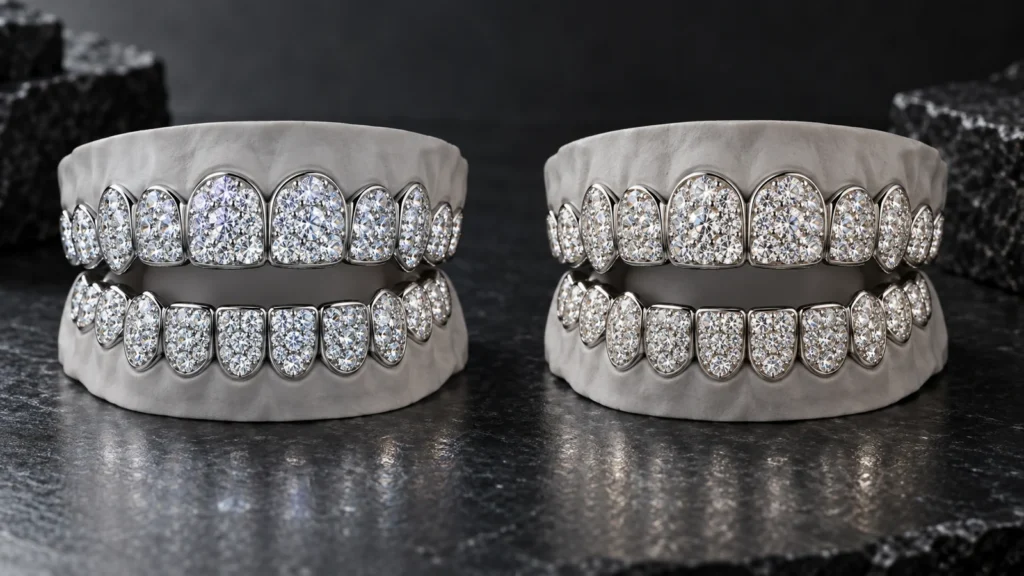
Moissanite and diamond can both produce a bright, stone-set grill, but they are different materials. A photograph rarely proves which one a listing contains. Words such as ‘iced’, ‘VVS’ or ‘diamond look’ can add to the confusion if the actual stone specification is missing.
This article helps a buyer compare the visual effect, construction and documentation of two otherwise similar custom designs. It does not classify a specific product without its written gem and metal details.
Identify the Stone Before Comparing Sparkle
Gemological Institute of America materials describe synthetic moissanite as silicon carbide used as a diamond simulant; it is not a diamond. A lab-grown diamond, by contrast, is diamond grown in a laboratory. Ask the seller to name the stone in ordinary terms rather than relying on ‘diamond-style’ marketing language.
Use the moissanite grillz collection to see possible looks, then confirm the stone type on the exact design. Products can appear in more than one category, and a category is not an independent gem report.
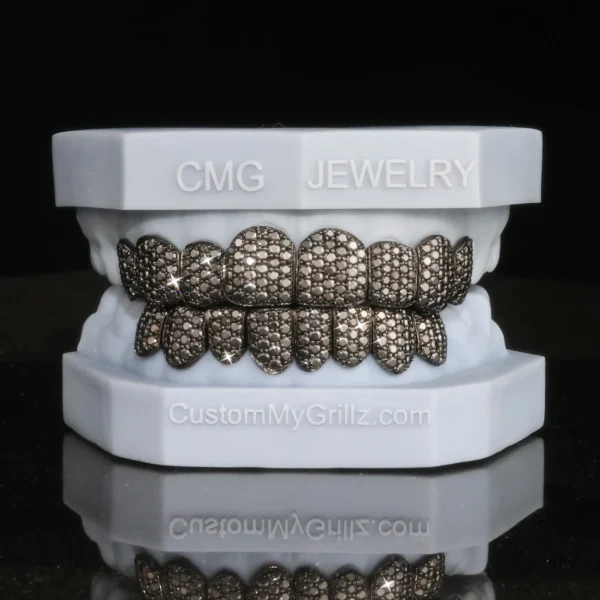
Black Moissanite Honeycomb Grillz
Compare Fire Without Assuming One Look
GIA describes moissanite as having strong colored flashes of light, known as fire, and optical doubling that can be visible under magnification. Diamond’s appearance also depends on cut and setting. In small stones, surrounding metal and lighting can dominate a photograph.
If the visual difference matters, request close video or approved samples under similar lighting and from the distance at which a grill is normally seen. Do not treat a filtered social clip as a standardized gem comparison.
Separate Natural Lab Grown and Simulant Labels
‘Diamond’ needs qualification if natural versus lab-grown origin is part of the buying decision; ‘moissanite’ identifies another mineral. The word ‘VVS’ is commonly associated with a diamond clarity category, but alone it does not establish the identity, origin or documentation of a stone in a grill.
Ask for an invoice specifying each material and any report number where a report is actually supplied. The diamond grillz category can be a visual reference, not evidence that every pictured stone has one identity or grade.
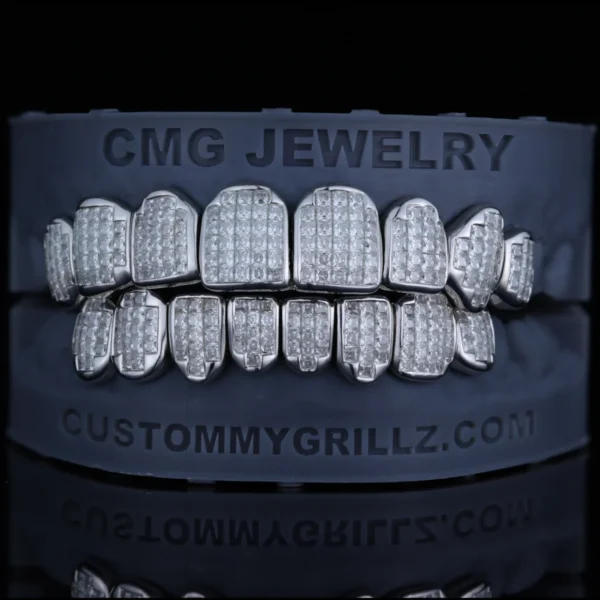
Invisible Square Cut Diamond Grillz
Look at the Setting and Tooth Layout
Stone count, size and arrangement influence both appearance and quote. A large open area with a few stones reads differently from a dense setting over several teeth. The width of the covered teeth, space between settings and finishing of the metal also affect the final design.
Describe the upper or lower teeth, coverage and desired pattern in one brief. Ask the maker to confirm that the chosen setting can be fabricated for that layout and what repair terms apply if a stone loosens. A gem’s hardness does not make a poorly fitted grill suitable.
Ask for Comparable Quotes
Hold the tooth count, base metal, coverage, design and stones’ approximate size or total weight constant when comparing quotations. A higher quote may reflect more stones or different fabrication rather than the stone name alone.
Request a line-by-line description of the actual option: stone identity and origin, number and approximate size, settings, metal, impression process, shipping and total. Avoid a universal ‘moissanite is always cheaper’ claim for every custom configuration.
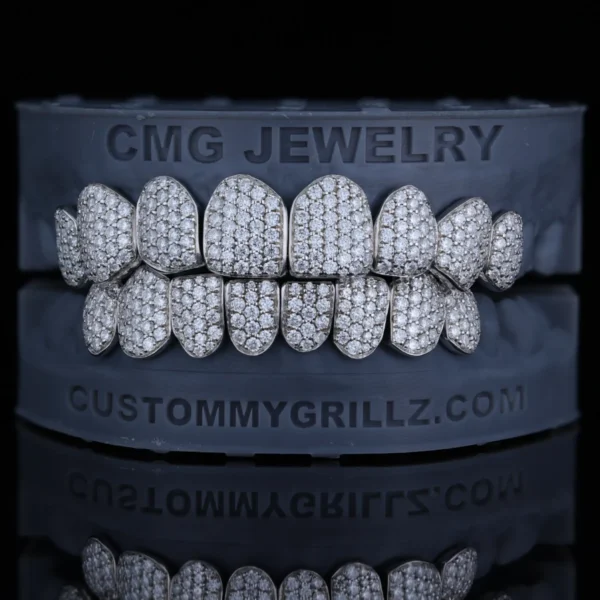
Plan Care for a Multi Material Piece
A set grill contains more than gemstones. Metal, finishes, settings and possibly coatings each have different care needs. Ask the maker for cleaning instructions for the entire piece, not just a gemstone recommendation copied from ring care.
The ADA advises removing grillz before eating and cleaning them daily. If a stone or setting feels loose, stop wearing the piece and ask the maker about repair; do not try household adhesive or a metal tool near your teeth.
Choose the Experience You Actually Want
If an intense multicolored flash is central to your design, examine a clearly identified moissanite sample. If diamond identity, origin and a particular documented stone quality matter more, ask what diamond documentation is available for the selected size and setting.
Both routes still need a verified metal specification, a practical tooth layout and an appropriate fit. Review the site’s ordering FAQs for the general process, then request a written answer to the questions that matter to your own design.
| Question | Moissanite route | Diamond route |
| Identity | Synthetic silicon carbide gem | Natural or lab-grown diamond, specified |
| Appearance | Strong colored fire described by GIA | Cut and setting shape appearance |
| Documentation | Ask for exact gem identification | Ask for origin and any report actually supplied |
| Quote | Compare same count, size and metal | Compare same count, size and metal |
Stone Set Grillz Buying Checklist
Before approving a design, request:
- The exact gemstone identity and whether any diamond is natural or lab grown.
- Stone count, approximate sizes, origin statement and available documentation.
- A drawing or approved photo showing which teeth and areas receive stones.
- The underlying metal, setting style, finish and repair or care instructions.
- A complete quote covering impressions, customization and delivery terms.
Frequently Asked Questions
Is moissanite the same as a lab grown diamond?
No. Moissanite is silicon carbide. A lab-grown diamond is diamond. Ask the seller to identify the gem actually offered.
Does VVS prove the stone is a diamond?
No. A style or clarity word without a named gemstone and relevant documentation is not enough to establish stone identity.
Which option sparkles more?
Appearance depends on stone properties, cut, size, lighting and setting. GIA describes strong fire in moissanite; compare actual samples or comparable videos.
Can a photo certify the stone type?
No. Request a written gem specification and any supporting report supplied for that particular design.
Conclusion
Choose a named gemstone and a documented setting, not an adjective in a product title. Compare the same tooth layout and metal so the stone decision has meaning.
If you have a reference look, contact CustomMyGrillz with the intended tooth count and ask which moissanite or diamond options and documentation are available for the exact piece.
Sources: GIA, An Introduction to Imitation Diamonds and Other Gems; GIA, Man-made Diamonds Questions and Answers; ADA MouthHealthy, Grills. Stone identity, origin and certification must be item-specific.