
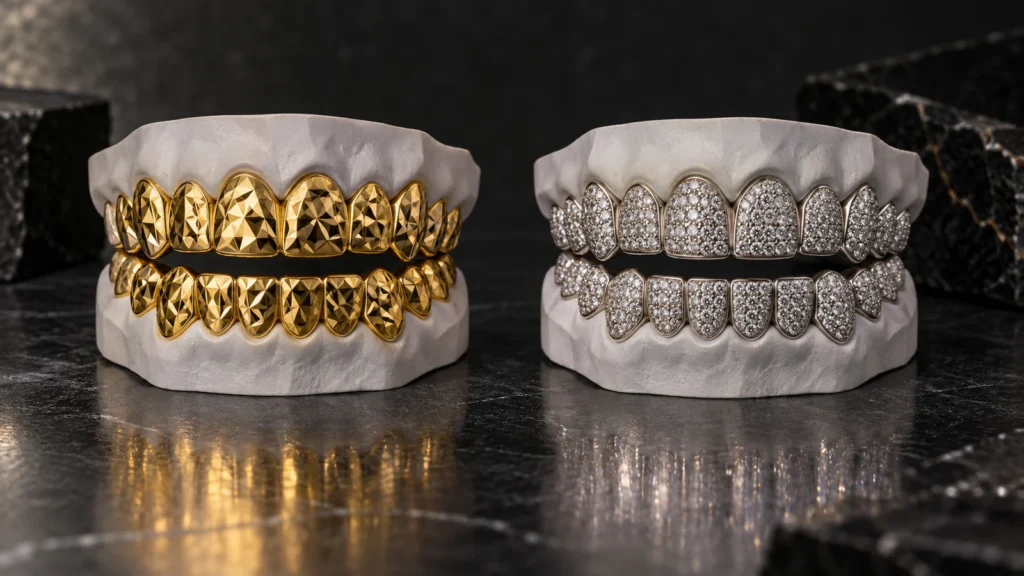
A grill can sparkle because its metal surface is cut into light-catching facets, because gemstones are set into it, or because the design combines both. A search for ‘diamond cut grillz’ can therefore lead to very different products. The title alone cannot establish stone content.
This article separates fabrication language from gemstone identity. Use it to ask better questions about a specific design rather than assuming every shining surface contains diamonds.
Define the Surface Pattern
In grillz shopping, ‘diamond cut’ can describe a pattern of cuts or facets on metal intended to reflect light. It is a finish description unless the listing separately states that identified stones are set. Ask which surfaces are cut and request a close photograph of the approved pattern.
Names for a cut pattern vary between makers. The moon cut grillz category gives one currently populated style reference, but its category name should not replace a product-specific drawing or material statement.
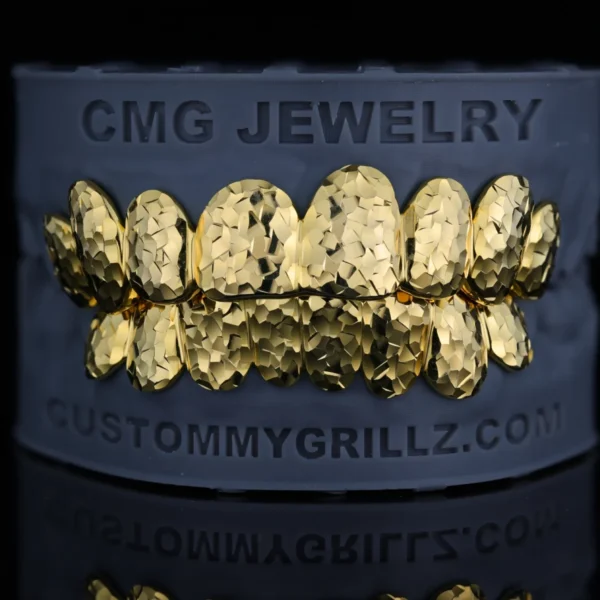
Crushed Ice Gold Finish Grillz
Identify a Real Stone Setting
A stone-set grill requires actual gems and a construction that holds them. The approved design should identify the stone type, number, approximate size or weight where supplied, and placement on each tooth. A reference to ‘diamonds’ should say whether any are natural or lab grown if that matters to the buyer.
Browse the diamond grillz category for possible layouts. Some items appear in multiple categories, so ask for written stone documentation on the precise option instead of assuming the category proves every setting.
Treat Diamond Dust as an Unclear Label
‘Diamond dust’ may be used loosely for a fine sparkle or texture. It does not tell a buyer whether there are diamond particles, tiny stones, engraved metal or another finish. Ask the maker to define the term for the actual product.
If the appearance depends on a coating or embedded particles, request maintenance and durability information for that specific construction. Do not rely on a search phrase to resolve what material touches the mouth or what can wear away.
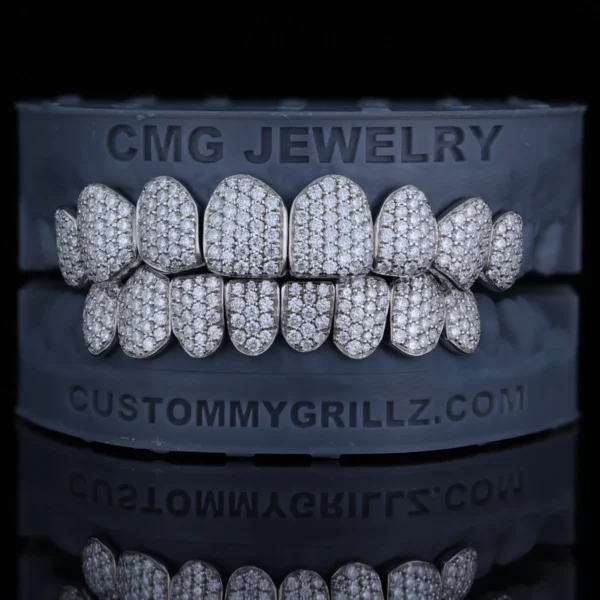
Read VVS and Cut Terms in Context
GIA uses cut to describe the design and craftsmanship of a diamond gemstone; that is different from a metal facet pattern called diamond cut in a grillz listing. VVS refers to a diamond clarity category in appropriate grading contexts, not a blanket guarantee attached to a finished grill.
If a seller quotes a diamond grade or report, ask which individual stones the claim covers and what documentation is actually supplied. Tiny stones in a dense setting are not automatically accompanied by individual laboratory reports.
Compare Light Effects on the Same Layout
A faceted metal cover tends to produce reflections from the metal itself. Set stones add a different pattern of points of light. Enamel, polish and colored plating can change both effects, so compare approved samples under similar lighting and viewing distance.
To make a fair comparison, keep the same tooth count and underlying metal where possible. A single cut-metal tooth and a sixteen-tooth stone-set design differ in more than finish. Match the geometry before drawing conclusions about the effect or the price.
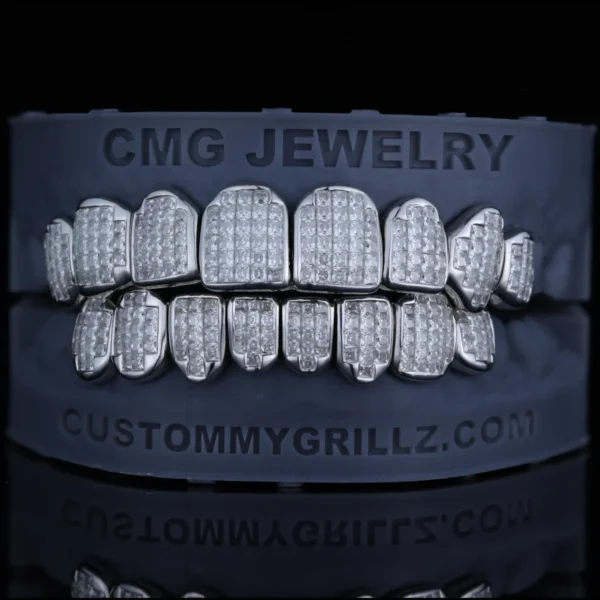
Invisible Square Cut Diamond Grillz
Review Setting and Fit Together
A maker has to allow space for settings within the available cover geometry. A thin open-face border, deep cut pattern and densely set stones may compete for the same surface. Ask for an approval drawing showing which detail goes on which tooth.
The ADA cautions that removable grills can trap debris and irritate tissues. Neither cut metal nor gemstones remove that concern. Review the site’s dental impression kit page for its fit route, and ask a dentist about individual oral-health concerns.
Document the Finish in the Quote
Your specification should distinguish base alloy, metal-cut pattern, surface coating, gemstone identity and setting. If the design combines them, identify which feature belongs to each tooth. Ask whether any surface treatment needs renewal and what repairs are available.
A drawing and written bill of materials are more useful than a phrase such as ‘full iced diamond dust’. Confirm the chosen item, exact stone terms, price and change rules before production begins.
| Term | What it may describe | Evidence to request |
| Diamond cut grillz | Faceted metal finish | Close view and maker specification |
| Stone set grillz | Gems mounted in a setting | Stone identity, count and layout |
| Diamond dust | Ambiguous sparkle description | Plain-language material definition |
| VVS diamond | Claim about diamond clarity | Scope and any report supplied |
Sparkle Specification Checklist
Translate style language into build details:
- Is the effect cut into metal, made with stones, produced by a coating or combined?
- Which exact surfaces have a metal pattern and which teeth contain settings?
- What gemstone material, origin, count and size is being quoted?
- What does any ‘VVS’ or ‘diamond dust’ claim mean for this order?
- What are the care, repair, impression and final-price terms?
Frequently Asked Questions
Do diamond cut grillz contain diamonds?
Not necessarily. The phrase can refer to a faceted metal finish. Actual stones should be stated separately in the product specification.
Is diamond dust a formal gemstone grade?
No. Ask the seller what the phrase means for the exact piece and what material produces the effect.
Does VVS identify a stone?
No. It is a clarity term in diamond grading contexts; it does not by itself name a gem or certify a finished grill.
Can a cut pattern and stones be combined?
They can be proposed together if the maker confirms enough space, fabrication feasibility and an approved layout for the actual teeth.
Conclusion
Treat sparkle words as design questions. Ask which surfaces are cut, whether there are stones and how each material is documented. This prevents a metal finish from being mistaken for a diamond purchase.
For a specific cut or stone-set reference, contact CustomMyGrillz and request an itemized description before approving the design and price.
Sources: GIA, Diamond Cut; GIA, An Introduction to Imitation Diamonds and Other Gems; ADA MouthHealthy, Grills. This article does not authenticate any product’s stones or finish.